Some dishes are eaten.
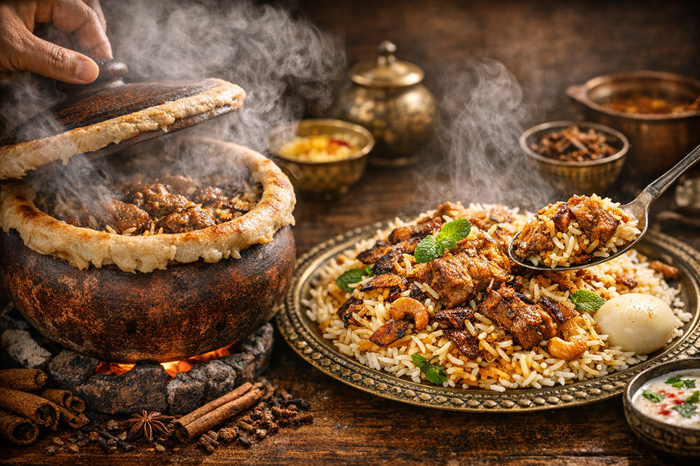
Dum Biryani is experienced.
The aroma that escapes when the seal is broken, the steam carrying layers of spice, rice, and slow-cooked richness, this is not accidental cooking. It is the result of centuries-old technique, patience, and culinary intelligence.
Let’s take a quick but meaningful journey into where Dum Biryani came from and why it tastes so unbelievably good, even today.
What Does “Dum” Actually Mean?
The word “Dum” comes from the Persian technique of slow cooking under pressure. In this method, food is sealed tightly and cooked on a low flame, allowing steam to circulate inside the vessel instead of escaping.
In simple terms:
- Nothing evaporates
- Nothing rushes
- Everything absorbs
This single technique is the backbone of Dum Biryani’s flavour.
A Brief History of Dum Biryani
Dum Biryani traces its roots to Persian and Central Asian kitchens, where slow-cooked rice and meat dishes were common. When these techniques arrived in India, especially during the Mughal era, they met local spices, basmati rice, and regional cooking wisdom.
Over time, Dum Biryani evolved into iconic regional styles:
- Hyderabadi Dum Biryani with bold yet balanced flavours
- Lucknowi or Awadhi Dum Biryani with a delicate aroma
- Kolkata Dum Biryani, which is mildly spiced and includes potatoes
Each version follows the same dum principle but expresses it differently.
Why Dum Biryani Tastes So Good (The Real Reasons)
This isn’t magic. It is a food science meeting tradition.
1. Sealed Cooking Traps Flavour
When the pot is sealed with dough or a tight lid, steam cannot escape. This trapped moisture:
- Softens the meat
- Infuses spices into every grain of rice
- Prevents drying or burning
The flavours circulate continuously, becoming deeper and more cohesive.
2. Slow Heat Builds Complexity
Unlike fast cooking, dum uses low, steady heat. This allows:
- Spices to bloom gradually
- Meat to tenderise naturally
- Rice to absorb flavour without breaking
Fast cooking creates sharp flavours.
Slow cooking creates a round, layered flavour.
3. Rice and Meat Cook Together, Not Separately
In dum biryani, rice and meat finish cooking together. This shared cooking environment means:
- Rice absorbs meat juices and spices
- Meat benefits from aromatic steam
- Nothing tastes isolated
That’s why dum biryani feels unified and not like rice and curry mixed later.
4. Natural Aromatics Do the Heavy Lifting
Instead of overpowering spice levels, dum biryani relies on:
- Whole spices
- Herbs like mint and coriander
- Ghee or fat for aroma
- Occasionally, saffron or kewra water
These release flavour slowly under steam, creating aroma before the heat hits the tongue.
5. Resting Is Part of the Cooking
After dum cooking, biryani is often rested before serving. This step allows:
- Steam to settle
- Moisture to redistribute
- Flavours to stabilise
Rushed biryani never tastes the same.
Dum Biryani vs Regular Biryani
| Dum Biryani | Regular Biryani |
|---|---|
| Sealed, slow cooking | Open or faster cooking |
| Deeper flavour infusion | Surface-level flavour |
| Moist, aromatic grains | Risk of dryness |
| Technique-driven | Recipe-driven |
Dum biryani depends more on process than ingredients alone.
Why Dum Biryani Still Wins Today
In a world of shortcuts and quick meals, dum biryani remains special because:
- It cannot be rushed
- It demands attention
- It rewards patience
Whether cooked at home, in royal kitchens of the past, or in professional kitchens today, the dum method remains unchanged because it works.
Final Thoughts
Dum Biryani tastes exceptional not because it is complicated, but because it respects time. Every sealed pot carries centuries of culinary wisdom, where flavour is not forced; it is earned.
That first spoonful isn’t just delicious.
It is history, science, and craft served hot.