India’s love for biryani is universal, but its expressions are beautifully regional. Among all variations, Hyderabadi Biryani and Lucknowi (Awadhi) Biryani stand tall as the most iconic. Both are royal, both are rooted in dum cooking, and both use premium basmati rice. Yet, the moment you take the first bite, you know they are worlds apart.
Understanding the difference between these two biryanis is not just about taste. It’s about history, technique, and culinary intent.
The Royal Kitchens: They Came From
Hyderabadi Biryani was perfected in the kitchens of the Nizams of Hyderabad. The cuisine of this region favoured bold flavours, richness, and generous use of spices. Food here was meant to impress instantly.
Lucknowi Biryani, on the other hand, emerged from the Awadhi courts of Lucknow, where food was treated as an art form. Elegance, balance, and subtlety mattered more than spice intensity.
The origins explain everything that follows on the plate.
How They Are Cooked Makes All the Difference
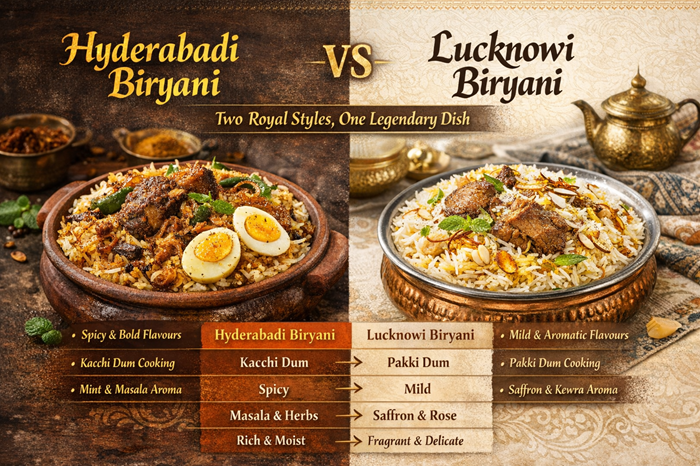
Hyderabadi Biryani uses the kacchi dum method. Raw marinated meat is layered directly with partially cooked rice and sealed for dum cooking. As everything cooks together, flavours become deep, intense, and intertwined.
Lucknowi Biryani follows the pakki dum method. The meat is first cooked separately in a delicate yakhni made with whole spices. Rice is also cooked separately. Both are then layered and finished on dum for aroma and cohesion.
One relies on fusion during cooking.
The other relies on precision before assembly.
Spice, Heat, and Balance
Hyderabadi biryani is known for its:
- Pronounced spice profile
- Use of chilli, ginger, garlic, and garam masala
- Tangy and rich masala base
Lucknowi biryani is known for its:
- Minimal chilli usage
- Dependence on whole spices
- Gentle seasoning that never overwhelms
Hyderabadi biryani stimulates the palate.
Lucknowi biryani calms it.
Aroma Tells the Story Before Taste
A defining difference lies in how aroma is created.
Hyderabadi biryani draws aroma from fried onions, herbs like mint and coriander, and robust masalas.
Lucknowi biryani builds aroma using saffron, kewra water, rose water, and slow-cooked yakhni. The fragrance is subtle but deeply inviting.
One announces itself boldly.
The other invites you quietly.
The Role of Rice in Each Style
In Hyderabadi Biryani, rice absorbs spice, colour, and meat juices. The grains are flavour-rich and slightly moist, often showing variation in colour due to masala.
In Lucknowi Biryani, rice remains pale, aromatic, and separate. Each grain is lightly coated, never drowned in spice.
Both use long-grain basmati, but they treat it very differently.
Final Comparison at a Glance
| Element | Hyderabadi Biryani | Lucknowi Biryani |
|---|---|---|
| Origin | Deccan, Nizam era | Awadh, royal courts |
| Cooking style | Kacchi dum | Pakki dum |
| Spice level | High | Mild |
| Aroma | Herb and masala-driven | Floral and delicate |
| Overall feel | Bold and indulgent | Refined and elegant |
Which One Should You Choose?
Choose Hyderabadi Biryani if you enjoy strong flavours spice, heat, and dramatic richness.
Choose Lucknowi Biryani if you prefer balance, aroma, and understated luxury.
Neither is better. They simply serve different moods.
Closing Thoughts
Hyderabadi and Lucknowi biryanis represent two philosophies of Indian cooking. One celebrates intensity. The other celebrates restraint. Together, they showcase why biryani remains one of India’s greatest culinary achievements.
Different styles.
Same royal soul.