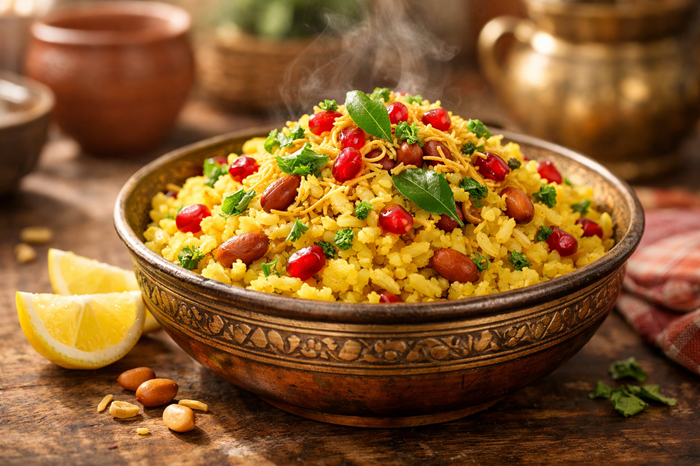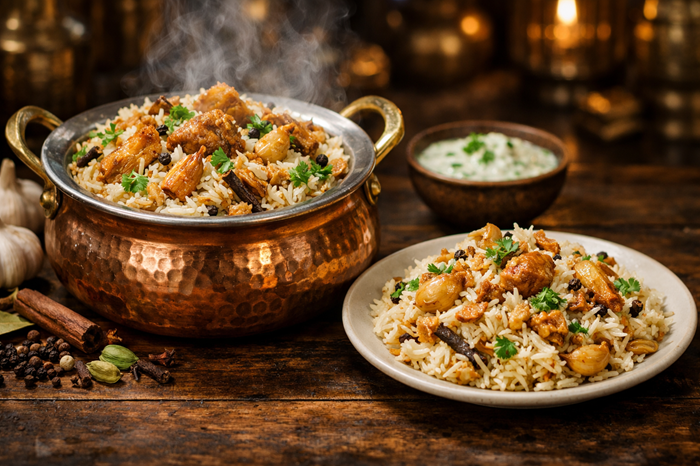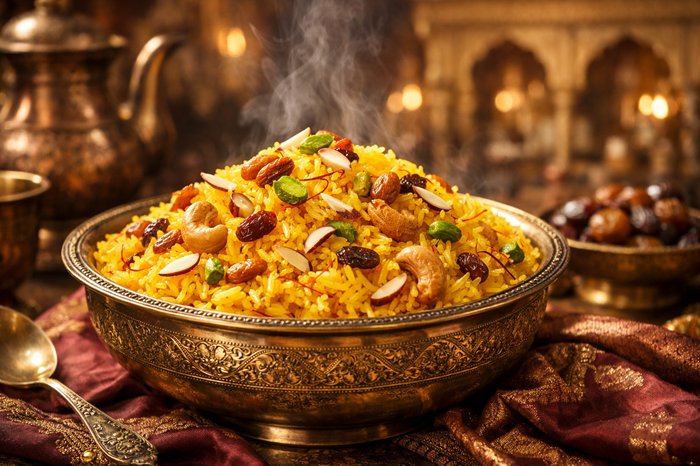
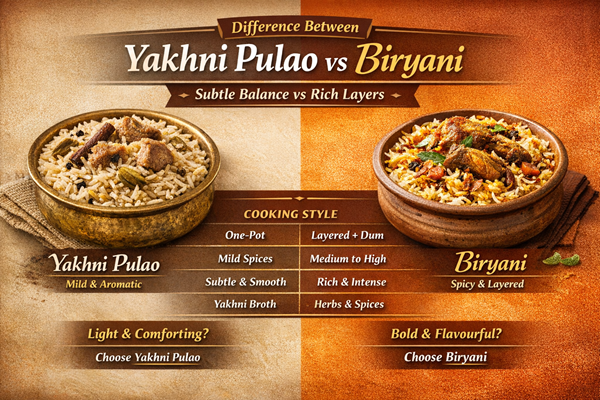
The difference between Yakhni Pulao and Biryani is one of the most searched food questions, especially among biryani lovers. While both dishes use rice and meat, their cooking method, spice level, flavour profile, and overall experience are completely different.
Understanding this difference helps you choose the right dish for the right occasion and appreciate each recipe for what it truly represents.
What Is Yakhni Pulao?
Yakhni Pulao is a traditional rice dish rooted in Awadhi and Central Asian cuisine. The word yakhni refers to a slow-cooked meat stock that forms the foundation of the dish.
How Yakhni Pulao Is Cooked
- Meat is gently simmered with whole spices to prepare yakhni
- Rice is cooked directly in this aromatic stock
- No heavy masala or layering
- No dum sealing
Key Characteristics of Yakhni Pulao
- Mild and balanced flavour
- No chilli heat
- Smooth, comforting taste
- One-pot cooking method
Yakhni Pulao is all about elegance, aroma, and subtlety.
What Is Biryani?
Biryani is a rich, layered rice dish known for its bold spices and dramatic presentation. Unlike pulao, biryani is cooked in multiple stages and finished using the dum cooking method.
How Biryani Is Cooked
- Meat is cooked separately with spices
- Rice is partially cooked on its own
- Both are layered together
- The pot is sealed and slow-cooked on dum
Key Characteristics of Biryani
- Strong spice profile
- Layered flavours
- Rich aroma
- Festive and indulgent
Biryani is designed to stand out and impress.
Key Difference Between Yakhni Pulao and Biryani
1. Cooking Method
Yakhni Pulao
- One-pot cooking
- Rice absorbs flavour from stock
Biryani
- Multi-step cooking
- Rice and meat layered and dum-cooked
2. Spice Level
Yakhni Pulao
- Mild spices
- Whole spices only
- No chilli
Biryani
- Medium to high spice
- Chilli, garam masala, herbs
3. Flavour Profile
Yakhni Pulao
- Unified and smooth flavour
- No sharp masala notes
Biryani
- Complex, layered flavours
- Each component retains identity
4. Aroma
Yakhni Pulao
- Stock-based aroma
- Soft and warming
Biryani
- Strong aroma from herbs, spices, fried onions
- Immediate sensory impact
5. Visual Appearance
Yakhni Pulao
- Uniform colour
- Simple and elegant look
Biryani
- Multiple layers and colours
- Visually rich and dramatic
Difference Between Yakhni Pulao and Biryani in Table Format
| Feature | Yakhni Pulao | Biryani |
|---|---|---|
| Cooking style | One-pot | Layered + dum |
| Spice level | Mild | Medium to high |
| Flavour | Subtle | Rich |
| Aroma | Stock-led | Spice and herb-led |
| Complexity | Simple | Elaborate |
Which Is Healthier: Yakhni Pulao or Biryani?
From a nutritional perspective:
- Yakhni Pulao is lighter, easier to digest, and lower in spices
- Biryani is richer and heavier due to masala, oil, and dum cooking
For everyday meals, Yakhni Pulao works better.
For celebrations, Biryani is the preferred choice.
Final Thought: Yakhni Pulao vs Biryani
The difference between Yakhni Pulao and Biryani lies in intent.
- Yakhni Pulao focuses on balance, comfort, and subtle aroma
- Biryani focuses on richness, layers, and bold flavour
They are not substitutes. They are two different culinary expressions using similar ingredients.
Understanding this difference deepens your appreciation of traditional rice dishes and helps you choose wisely based on taste, occasion, and preference.