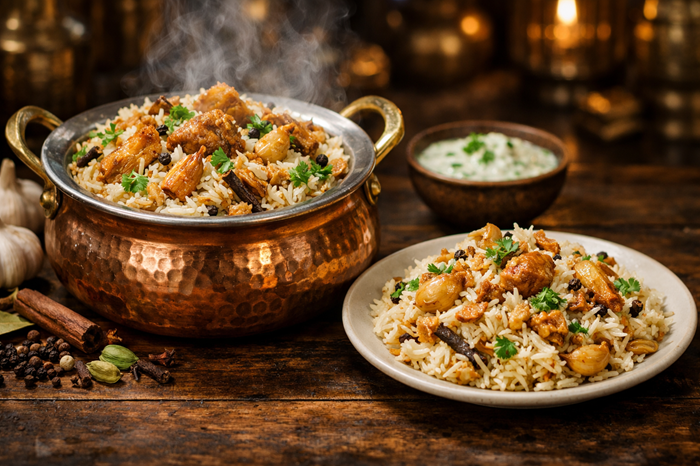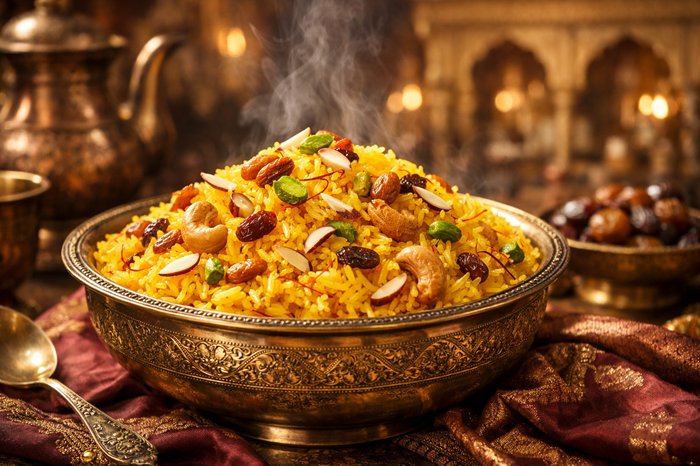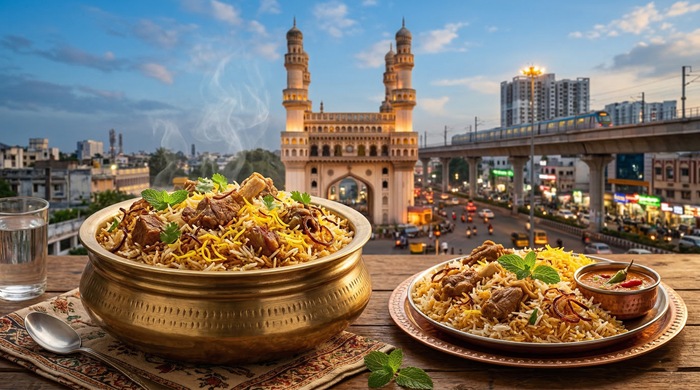
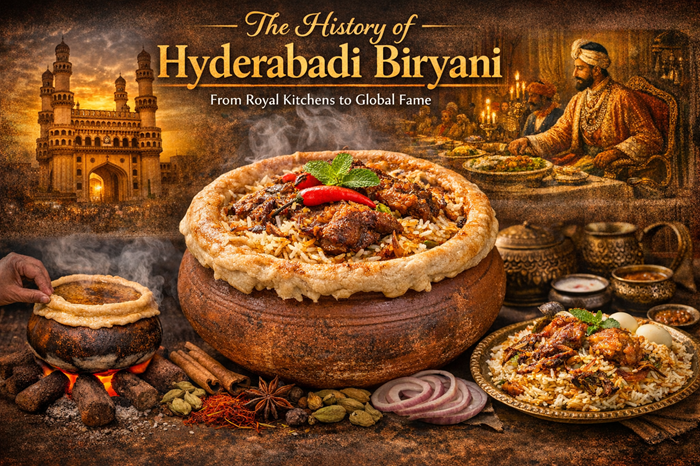
Hyderabadi Biryani is not just food. It is legacy, technique, and cultural pride layered into a single pot. Every grain of rice, every note of spice, carries a story that began centuries ago in royal kitchens and continues today in homes, restaurants, and streets across the world.
To understand Hyderabadi Biryani, you have to understand Hyderabad itself.
The Birthplace: Royal Kitchens of Hyderabad
Hyderabadi Biryani originated in the princely state of Hyderabad, under the rule of the Nizams of Hyderabad, one of the wealthiest and most powerful dynasties in Indian history.
The Nizams were known for their refined taste, lavish feasts, and deep appreciation for Persian and Mughal culinary traditions. Their kitchens were spaces of experimentation, where Central Asian techniques met Indian ingredients and local spice wisdom.
This fusion laid the foundation for what we now call Hyderabadi Biryani.
Persian Influence Meets Indian Ingenuity
The concept of biryani itself came from Persian and Mughal cuisine, where rice and meat were slow-cooked together. When this technique arrived in Hyderabad, it transformed.
Indian cooks introduced:
- Local spices
- Native herbs like mint and coriander
- Premium long-grain basmati rice
What emerged was richer, bolder, and more aromatic than its predecessors. The dish adapted to local tastes while retaining its royal soul.
The Signature Kacchi Dum Technique
What truly defines Hyderabadi Biryani is the kacchi dum method.
In this technique:
- Raw marinated meat is layered with semi-cooked rice
- The pot is sealed tightly, traditionally with dough
- The biryani is cooked slowly on low heat
As everything cooks together, meat juices, spices, and rice merge into a deeply integrated flavour profile. This method demands skill, patience, and precision, which is why it was perfected in royal kitchens.
Why Hyderabadi Biryani Is Bold by Design
Hyderabadi Biryani reflects the personality of the Deccan region. It is:
- Robust in flavour
- Generous with spices
- Rich in aroma and texture
Unlike more delicate biryanis, this version is unapologetically intense. Chilli heat, fried onions, herbs, and spices work together to create a dish that leaves a lasting impression.
This boldness was intentional. Royal feasts were meant to impress.
From Palace Feasts to People’s Plates
Over time, Hyderabadi Biryani moved beyond palace walls. As cooks migrated and recipes were shared, the dish found its way into:
- Noble households
- Community kitchens
- Street food culture
Each generation preserved the core technique while adapting it slightly to availability and scale. What remained unchanged was the dum method and the respect for process.
Hyderabadi Biryani Today
Today, Hyderabadi Biryani is recognised worldwide. It is served in:
- High-end restaurants
- Casual eateries
- Home kitchens across continents
Despite modern equipment and shortcuts, the essence of authentic Hyderabadi Biryani remains rooted in slow cooking, layered assembly, and disciplined technique.
It has become a symbol of Hyderabad’s identity and India’s culinary excellence.
Why History Still Matters
Understanding the history of Hyderabadi Biryani explains why it cannot be rushed, diluted, or simplified without losing its soul. It is not a recipe you follow blindly. It is a method you respect.
That respect is what keeps the dish timeless.
Final Thoughts
Hyderabadi Biryani is more than a famous dish. It is a living tradition shaped by royalty, geography, and craftsmanship. From the Nizams’ kitchens to modern dining tables, its journey reflects how great food survives by staying true to its roots.
When you eat Hyderabadi Biryani, you are not just tasting rice and meat.
You are tasting history, patience, and pride.