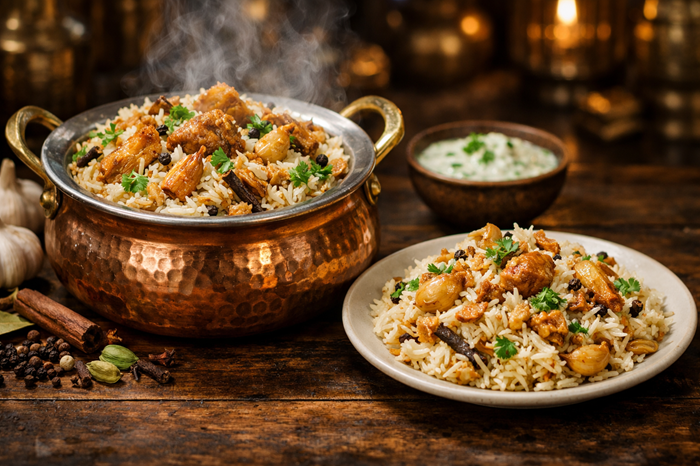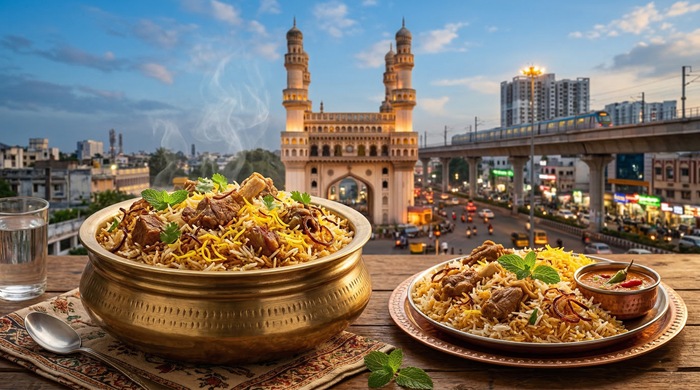
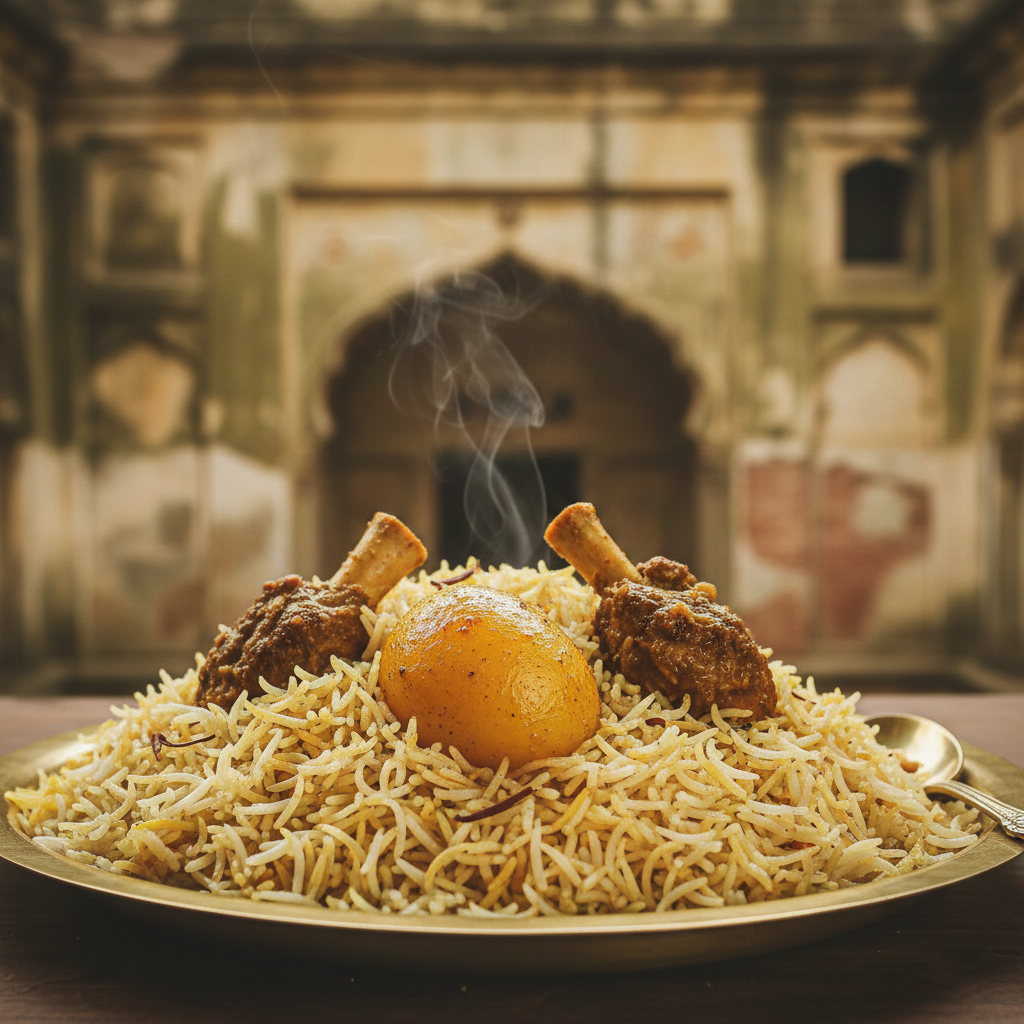
Kolkata Biryani is proof that some of India’s most iconic dishes were born not out of luxury, but loss, adaptation, and resilience. Delicate, aromatic, and instantly recognisable for its legendary potato, this biryani tells a deeply human story rooted in history.
Its journey begins in Kolkata, but its soul traces back to the royal kitchens of Awadh.
A Royal Exile That Changed Indian Food Forever
The origins of Kolkata Biryani date back to the mid-19th century, when Wajid Ali Shah, the last Nawab of Awadh, was exiled by the British and sent to Kolkata.
Stripped of power but not of culture, the Nawab brought with him:
- His poets
- His musicians
- His khansamas (royal cooks)
- And, of course, his Awadhi culinary heritage
Settling in the area of Metiabruz, the Nawab recreated a miniature Awadh, where food became a way to preserve identity.
From Royal Richness to Practical Adaptation
In Lucknow, biryani was rich, meat-heavy, and indulgent. But exile changed realities.
Resources were limited. Royal kitchens had to adapt. That’s when the most iconic element of Kolkata Biryani was introduced-the potato.
Potatoes:
- Were affordable and filling
- Absorbed flavours beautifully
- Allowed the dish to remain generous despite reduced meat
What started as a necessity slowly became a signature.
What Makes Kolkata Biryani Unique?
Kolkata Biryani carries Awadhi elegance but speaks in a softer, subtler voice.
Its defining features include:
- Long-grain basmati rice
- Light, fragrant seasoning
- Minimal use of chilli and masala
- Aromas of kewra and rose water
- Large, golden potatoes cooked in meat stock
- Often topped with boiled eggs
The flavour is never loud. It’s measured, balanced, and refined.
Technique Over Spices
Like its Lucknowi ancestor, Kolkata Biryani follows the Dum Pukht method-slow cooking in sealed vessels.
Rice and meat are cooked separately, layered carefully, sealed with dough, and cooked on gentle heat. The result is biryani where:
- Every grain remains separate
- Aromas linger, not overpower
- The potato becomes as celebrated as the meat
Few dishes give a vegetable such royal importance.
From Nawabi Kitchens to Kolkata Streets
Over time, the biryani moved out of Metiabruz and into the streets of Kolkata. Local cooks adopted the recipe, preserved its soul, and passed it down generations.
Today, Kolkata Biryani is a staple at:
- Old city eateries
- Wedding feasts
- Sunday family lunches
- Late-night street food joints
It’s not festive food alone-it’s emotional food.
A Biryani That Reflects Kolkata’s Soul
Just like the city itself, Kolkata Biryani is:
- Gentle, not aggressive
- Cultural, not commercial
- Deeply rooted in history
It blends Persian grace, Awadhi discipline, and Bengali sensitivity, creating something entirely its own.
Final Thought
Kolkata Biryani isn’t defined by what it adds-it’s defined by why it added it.
The potato isn’t a compromise.
It’s a reminder that food evolves with people, places, and time.
Every plate of Kolkata Biryani carries the memory of a lost kingdom, the warmth of adaptation, and the quiet confidence of a city that knows how to turn history into heritage.