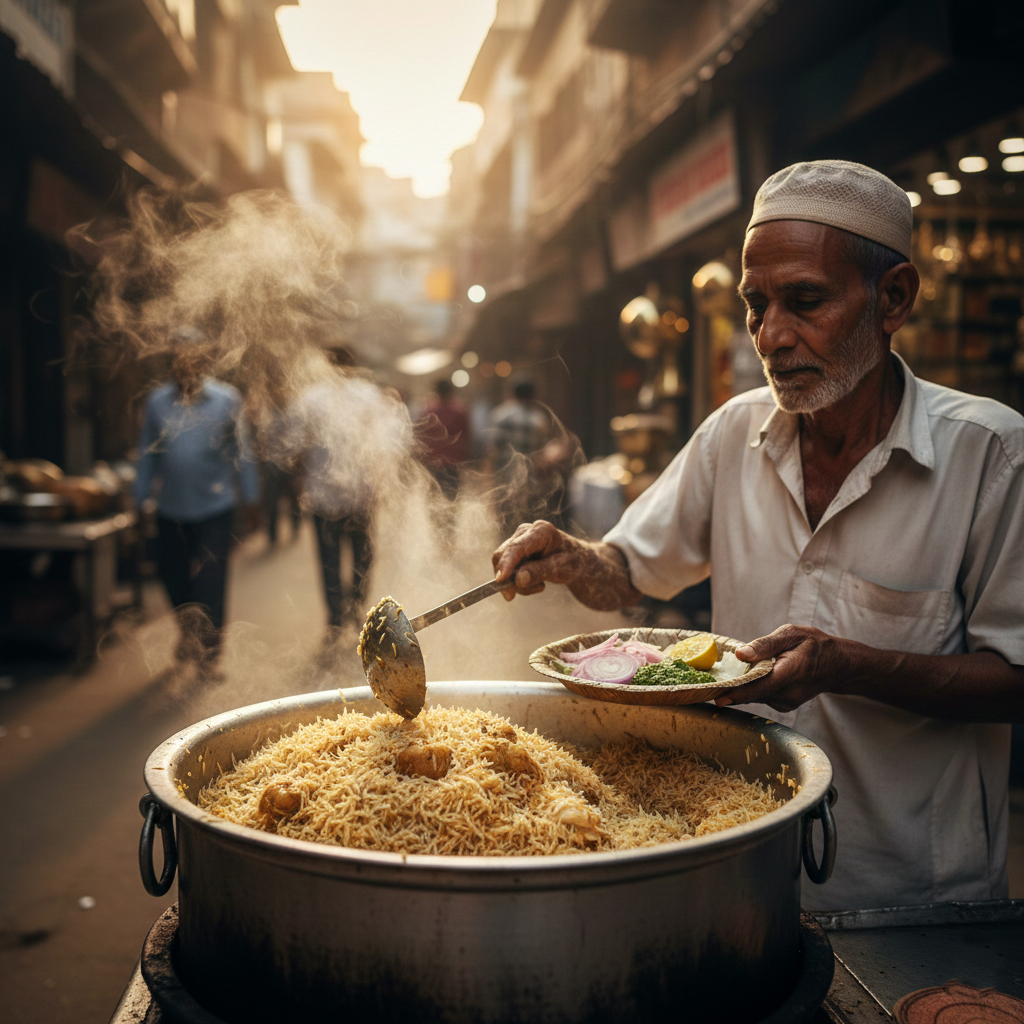
When people talk about biryani in India, rich layers of spices, saffron aroma, and slow dum cooking usually take centre stage. But in the bustling streets of Moradabad, a very different biryani tells its story-simple, bold, and deeply soulful.
This is the story of Muradabadi Biryani, a dish that proves flavour doesn’t always need complexity.
A Biryani Born from Royal Influence & Local Wisdom
Muradabadi Biryani traces its roots back to the Mughal era, when royal kitchens influenced food habits across North India. As Mughal culinary traditions travelled eastwards, they adapted to local tastes, ingredients, and lifestyles.
Unlike the heavily layered biryanis of Lucknow or Hyderabad, Muradabadi Biryani evolved as a lighter, quicker, and more functional meal-perfect for traders, artisans, and working communities.
Moradabad, known for its brass industry and busy markets, needed food that was:
- Nourishing
- Easy to digest
- Quick to serve
- Full of flavour without excess richness
Muradabadi Biryani answered all of that.
What Makes Muradabadi Biryani Different?
Muradabadi Biryani stands apart because of what it doesn’t use, as much as what it does.
Key characteristics:
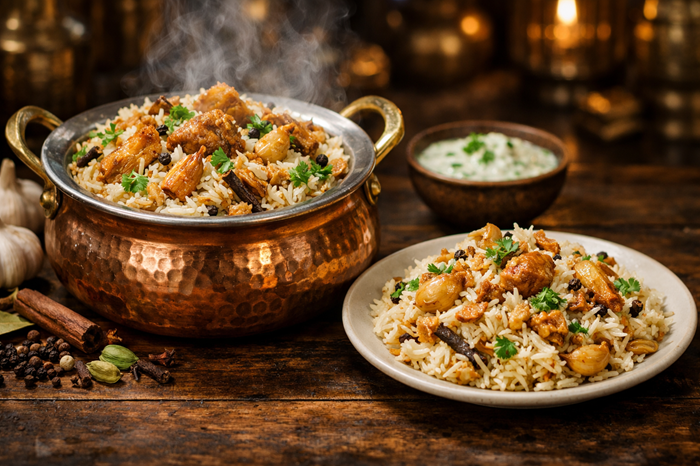
- Made with long-grain rice
- Cooked using meat stock (yakhni-style broth)
- Minimal spices-no overpowering garam masala
- No tomatoes, no heavy masala base
- Served with green chutney, sliced onions, and lemon
The focus is on meat flavour and broth, not spice overload. Every grain of rice absorbs the essence of the stock, creating a clean, comforting taste.
Chicken Over Mutton: A Practical Choice
While many traditional biryanis favour mutton, Muradabadi Biryani is most commonly made with chicken. The reason is practical:
- Chicken cooks faster
- The broth stays light
- Suitable for mass cooking
This made it ideal for roadside vendors and small eateries, helping the dish spread quickly across Moradabad and nearby regions.
Street Food That Became a Signature
Muradabadi Biryani didn’t grow inside palaces-it grew on the streets.
Served in simple plates, often eaten standing, it became a go-to meal for:
- Factory workers
- Shopkeepers
- Students
- Travellers
Over time, what started as everyday food became a regional identity dish-recognized for its honesty and balance.
Less Masala, More Technique
The magic of Muradabadi Biryani lies in technique, not ingredients.
- Slow-cooked stock
- Perfect rice-to-water ratio
- Controlled heat
- Precise seasoning
One mistake, and the biryani loses its soul. That’s why experienced cooks, not recipes, carry its legacy.
Muradabadi Biryani Today
Today, Muradabadi Biryani continues to thrive in:
- Local markets
- Highway dhabas
- Small family-run outlets
It hasn’t been over-modernised-and that’s its biggest strength. In an era of fusion food, Muradabadi Biryani stays rooted, reminding us that authentic taste often comes from restraint.
Final Thought
Muradabadi Biryani is not about richness-it’s about clarity of flavour.
Not about layers-it’s about balance.
Not about extravagance-it’s about everyday satisfaction.
It’s a biryani that feeds the body, respects tradition, and tells a story of a city that values hard work, simplicity, and honest food.