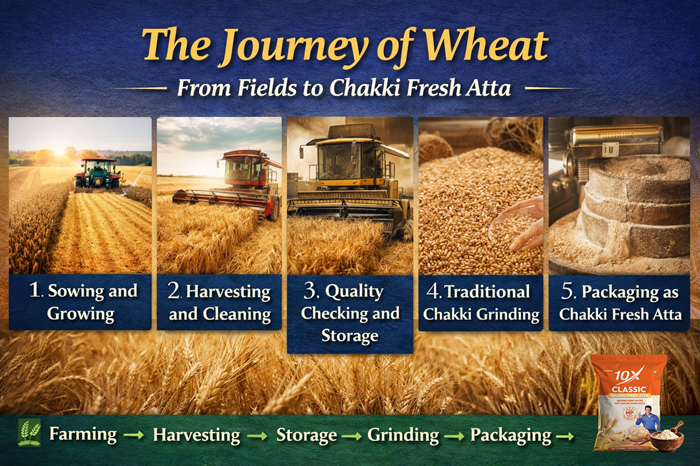
Every roti begins long before the dough is kneaded. It starts in golden wheat fields, shaped by soil, seasons, and careful farming. The journey from standing crop to Chakki Fresh Atta is not just a supply chain. It is a story of agriculture, precision, and preservation of nutrition.
Understanding this journey helps us appreciate what truly goes into everyday food.
Step 1: Sowing in India’s Wheat Belt
India’s fertile plains, particularly in northern regions, provide ideal conditions for wheat cultivation. Farmers select high-quality wheat seeds and sow them during the winter season. The crop depends on:
- Balanced soil nutrients
- Proper irrigation
- Controlled use of fertilisers
- Favourable climatic conditions
Over months, the crop matures into golden fields ready for harvest.
This first stage determines grain strength, protein quality, and eventual flour performance.
Step 2: Harvesting and Primary Cleaning
Once fully ripened, wheat is harvested using modern combine harvesters or traditional methods in some regions. The harvested grain is then:
- Cleaned to remove dust and foreign particles
- Sorted to maintain uniform size
- Dried to optimal moisture levels
Moisture control is critical. Too much moisture affects storage stability. Too little affects grinding quality.
Step 3: Storage and Quality Checks
Before milling, wheat grains undergo strict quality inspection. Key parameters evaluated include:
- Grain hardness
- Protein content
- Purity level
- Moisture percentage
Only selected grains move forward for processing. Proper storage in controlled environments ensures:
- Protection from pests
- Stable moisture levels
- Preservation of natural grain quality
Quality at this stage directly influences the final atta texture.
Step 4: Traditional Chakki Grinding Process
The defining stage in this journey is chakki grinding.
Unlike high-speed roller milling, chakki grinding uses slow rotational pressure to crush whole wheat grains. This method:
- Generates minimal heat
- Retains natural fibre and bran
- Preserves wheat germ oils
- Maintains natural aroma
Because the grain is ground whole, nothing essential is stripped away. The result is flour that stays closer to its natural form.
Step 5: Packaging as Chakki Fresh Atta
Freshly ground atta is immediately packed under hygienic conditions to preserve:
- Freshness
- Nutritional integrity
- Natural taste
Modern packaging prevents exposure to air and moisture, ensuring longer shelf stability without compromising quality.
Why the Chakki Process Matters
The difference between regular refined flour and chakki fresh atta lies in the processing philosophy.
Chakki grinding supports:
- Better fibre retention
- Improved digestion
- Softer, well-puffed rotis
- Consistent dough binding
This is why many households prefer chakki atta for everyday meals.
From Farm to Kitchen: A Continuous Chain of Care
The journey from wheat field to chakki fresh atta involves:
- Responsible farming
- Careful harvesting
- Quality-controlled storage
- Traditional grinding
- Hygienic packaging
Each step protects the integrity of the grain.
Final Thoughts
The journey of wheat does not end at the farm. It continues through careful processing and traditional grinding methods that preserve nutrition and taste. Chakki Fresh Atta represents this complete cycle, where modern quality standards meet time-tested techniques.
The next time you prepare roti, remember that it carries a journey shaped by farmers, mills, and careful craftsmanship.
From golden fields to everyday meals, the story of wheat is one of continuity, care, and nourishment.