Basmati rice is known for its long grains, rich aroma, and light texture. But when it comes to nutrition, many people ask an important question: What is the healthiest Basmati rice?
With options like white Basmati, brown Basmati, steam Basmati, and parboiled Basmati available in the market, choosing the healthiest type depends on your dietary goals, lifestyle, and health conditions.
In this detailed guide, we break down the nutritional differences, health benefits, and best choice depending on your needs.
Understanding Basmati Rice Varieties
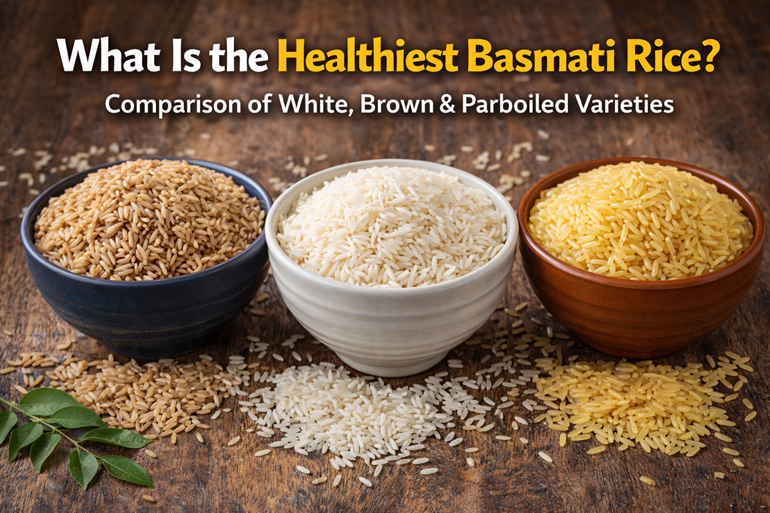
Before identifying the healthiest Basmati rice, it’s important to understand the main types available:
- White Basmati Rice
- Brown Basmati Rice
- Steam Basmati Rice
- Parboiled or Golden Sella Basmati Rice
Each type differs in processing method, fiber content, and nutritional value.
Brown Basmati Rice: The Healthiest Overall Choice
If we compare nutritional value, Brown Basmati rice is generally considered the healthiest Basmati rice.
Why Brown Basmati Is Healthier
Higher Fiber Content
Brown Basmati retains its bran layer, which increases dietary fiber. Fiber supports digestion and helps you feel full longer.
Lower Glycemic Impact
Brown Basmati rice typically has a lower glycemic index compared to white rice, which helps maintain steadier blood sugar levels.
Rich in Nutrients
It contains more magnesium, phosphorus, and B vitamins because it undergoes minimal processing.
Better for Weight Management
The fiber and slower digestion make it more suitable for weight-conscious individuals.
White Basmati Rice: Lighter and Easier to Digest
White Basmati rice has its bran layer removed during processing. While it contains less fiber than brown rice, it still offers certain benefits:
- Naturally gluten-free
- Easier to digest
- Lower in calories compared to some other rice varieties
- Lower glycemic index than many non-Basmati white rice types
For individuals with sensitive digestion, white Basmati rice can be a practical option.
Parboiled or Golden Sella Basmati Rice
Parboiled Basmati rice is partially boiled before milling. This process helps retain some nutrients that would otherwise be lost.
Health aspects of parboiled Basmati rice:
- Slightly better nutrient retention than regular white rice
- Firmer texture
- Moderate glycemic impact
It can be a balanced middle option between white and brown Basmati.
Quick Comparison: Healthiest Basmati Rice Types
| Type of Basmati Rice | Fiber | Glycemic Index | Nutrient Level | Best For |
|---|---|---|---|---|
| Brown Basmati Rice | High | Lower | High | Weight loss, diabetics |
| White Basmati Rice | Low | Moderate | Moderate | Easy digestion |
| Parboiled Basmati | Medium | Moderate | Medium | Balanced diet |
Which Basmati Rice Is Best for Specific Health Goals?
For Weight Loss
Brown Basmati rice is ideal due to higher fiber and better satiety.
For Diabetics
Brown Basmati rice is generally recommended because of its lower glycemic index. However, portion control is essential.
For Easy Digestion
White Basmati rice is lighter and easier on the stomach.
For Balanced Nutrition
Parboiled Basmati rice offers moderate fiber and nutrient retention.
Nutritional Comparison (Per 100g Approximate)
Brown Basmati Rice
- Higher fiber
- More micronutrients
- Slightly more calories
White Basmati Rice
- Lower fiber
- Lower micronutrients
- Softer texture
Parboiled Basmati Rice
- Moderate fiber
- Better nutrient retention than regular white rice
Actual values may vary by brand and processing method.
Is Basmati Rice Healthier Than Regular White Rice?
Yes, Basmati rice often has a lower glycemic index compared to many standard white rice varieties. This makes it a better option for blood sugar management when consumed in controlled portions.